How to Lose Fat and Gain Muscle at the Same Time
And I’m on a mission to get a barbell in every woman’s hands. After my career in powerlifting, I’ve spent the last decade educating millions of people on how to get stronger and build confidence in a world that’s focused on shrinking them.
I now coach 25,000+ women inside my strength training app, and this blog is where I share the conversations, lessons, and questions worth digging into a little deeper.
Hi, I'm meg

(Yes, It’s Possible — But Not for Everyone)
If you’ve ever asked:
“Can I lose fat and build muscle at the same time?”
The short answer: yes.
The longer answer: it depends on who you are.
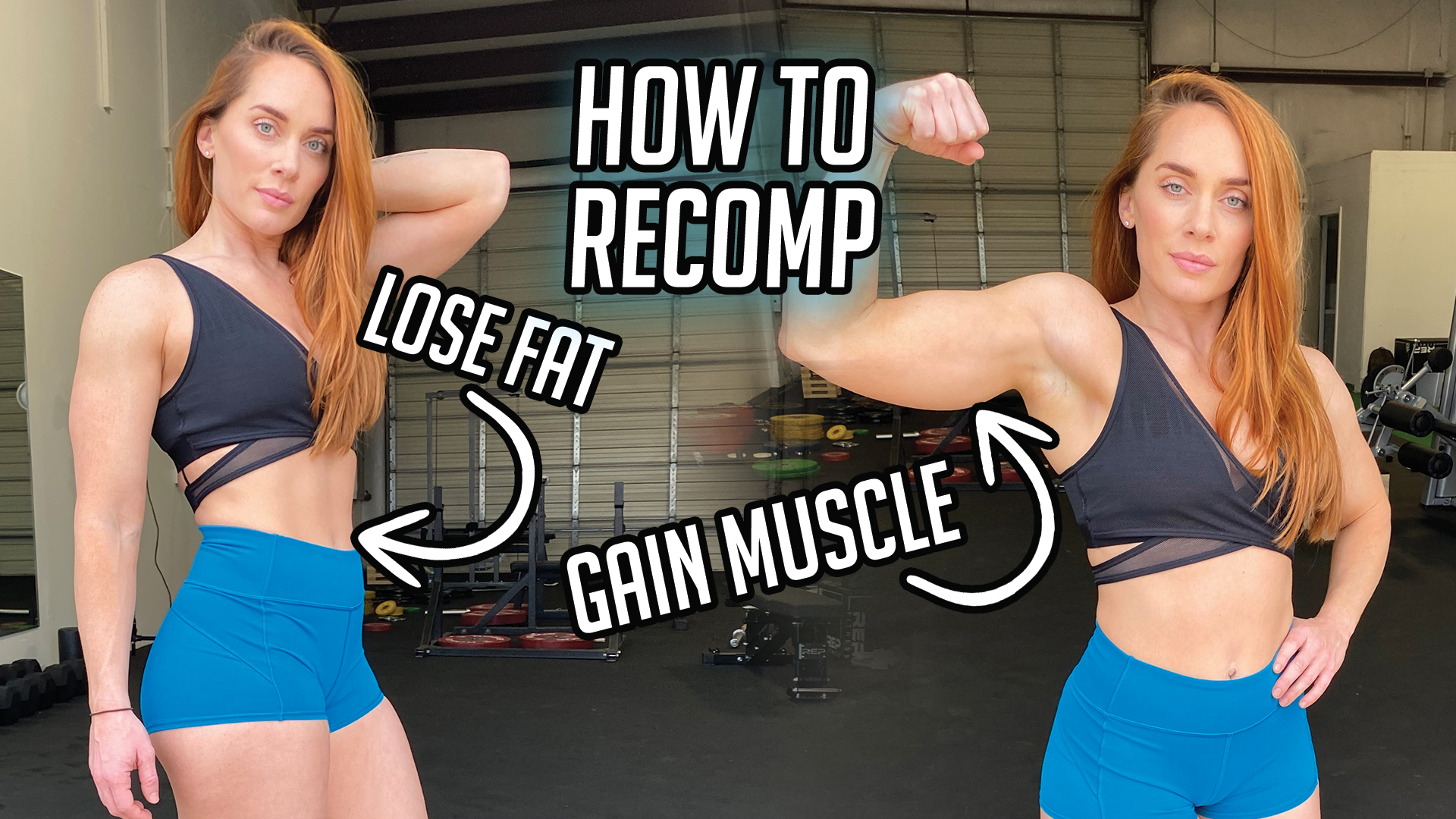
Body recomposition — burning fat while gaining muscle in the same phase — is possible. But some people will experience it much more easily (and more visibly) than others.
Let’s break down:
- The 4 groups who can recomp more easily
- What to do if you’re in one of those groups
- What to expect if you’re not
First: What Is Body Recomposition?
Body recomposition means:
- Decreasing body fat
- Increasing lean muscle mass
- Without doing a traditional bulk → cut cycle
It’s not magic. It’s physiology. But the timeline and visibility of results vary dramatically based on your training history and body composition.
The 4 Groups Who Can Recomp More Easily
1️⃣ New Lifters (Novices)
If you’ve never run a structured strength program before — you’re a novice.
And that’s great news.
Even if you’ve “worked out for years,” if you’ve never:
- Followed a progressive strength program
- Focused on compound lifts
- Applied progressive overload intentionally
…you likely still qualify.
Why novices recomp easily:
- Your body is highly responsive to new stimulus
- You can gain muscle quickly
- You can lose fat while gaining strength
These are the famous “newbie gains.”
When Meg first started lifting (after years of running), she:
- Started CrossFit
- Increased protein intake
- Followed structured programming
The result? Noticeable muscle gain and fat loss in the same phase.
If you’re new:
- Don’t overcomplicate it
- Get on a program
- Eat enough protein
- Train consistently
This is your golden window.
2️⃣ Individuals With Higher Body Fat to Lose
If you have a significant amount of body fat to lose, you can often:
- Build muscle
- Lose fat
- At the same time
Common question:
“Should I lose weight before I start lifting?”
Answer: No.
Here’s why:
- Strength training increases daily energy expenditure
- You begin building lean tissue immediately
- More lean mass supports long-term fat loss
- There’s a learning curve — no reason to delay it
Waiting doesn’t give you an advantage. Starting does.
If you’re in this group:
- Lift now
- Prioritize protein
- Focus on consistency, not perfection
3️⃣ Detrained Lifters (You Used to Train, Then Stopped)
If you:
- Took months (or years) off
- Got kicked out of the gym
- Had life happen
You’re in a powerful position.
Thanks to muscle memory, regaining lost muscle happens faster than building it the first time.
The key here is recovery.
The biggest mistake detrainees make:
Going back to the gym and trying to hit old PRs immediately.
Instead:
- Run a structured comeback plan
- Consider linear progression
- Focus on sustainable volume
- Respect recovery
You don’t need to “make up for lost time.”
You need to rebuild intelligently.
4️⃣ People Using Anabolic Steroids
Yes — enhanced lifters can recomp aggressively.
No — that’s not what we’re recommending here.
We’re talking about natural lifters.
What If You’re Not in Those 4 Groups?
If you’re:
- An intermediate or advanced lifter
- Already relatively lean
- Training consistently
You can recomp.
But it will be slower.
Instead of seeing changes month-to-month, you may notice:
- Subtle changes every 6–12 months
- Gradual strength increases
- Slight shifts in body composition year-over-year
That’s normal.
The Foundations of Recomp (For Everyone)
No matter which group you’re in, these principles apply:
1️⃣ Calorie Balance
To lose fat:
- You need a calorie deficit.
To gain muscle:
- You need adequate fuel.
For most recomposition phases:
- A small deficit or maintenance calories works best.
2️⃣ Protein Intake
Aim for:
~1 gram of protein per pound of bodyweight
(Cap around 250g if bodyweight is very high.)
Protein:
- Supports muscle repair
- Improves satiety
- Protects lean mass during fat loss
If you change nothing else but hit protein consistently, you’ll likely improve body composition.
3️⃣ Follow a Real Strength Program
This is non-negotiable.
A good program should:
- Prioritize compound lifts (squat, bench, deadlift, rows, presses)
- Apply progressive overload
- Track sets, reps, and load
- Run 8–12 weeks minimum
If you’re just doing random Instagram workouts, your results will reflect that.
Progress comes from:
Doing slightly more over time.
4️⃣ Cardio (Strategically)
Cardio can:
- Support fat loss
- Improve conditioning
- Enhance recovery (if low intensity)
But if time is limited:
Strength training comes first.
Add cardio when:
- You enjoy it
- It fits your schedule
- It doesn’t compromise recovery
Bulk and Cut vs. Recomp
Some lifters prefer:
- Intentional bulks
- Intentional cuts
Others want to:
- Stay roughly the same weight year-round
- Improve composition gradually
Both approaches work.
If you enjoy:
- Holiday indulgence
- Seasonal flexibility
You can informally “bulk” and “cut” throughout the year — just be intentional.
The biggest long-term issue isn’t holiday food.
It’s unintentional weight creep over years.
Awareness solves that.
How to Track Progress (Without Obsessing Over the Scale)
If your goal is recomposition, the scale may barely move.
Better tools:
- Progress photos
- Waist measurements
- Strength progression
- Performance markers
Muscle gain and fat loss can offset each other on the scale.
Don’t let one data point define success.
The Bottom Line
Body recomposition is real.
It’s just:
- Easier for novices
- Easier for those with higher body fat
- Easier for detrainees
- Slower for advanced lifters
If you’re new?
You’re in the best possible position.
If you’re advanced?
Patience is your superpower.
Train hard.
Eat enough protein.
Follow a program.
Give it time.
That’s how you lose fat and gain muscle at the same time — the sustainable way.
Want More Like This?
This is the kind of experiment I love doing – testing popular fitness ideas against real training principles and lived experience.
I share new breakdowns, lessons, and strong opinions directly to my email newsletter subscribers. If you don’t want to miss what I’m working on next, you can subscribe here:
👉 Join here
If you’d rather watch my full Body Recomp YouTube video, you can watch it here. And if it’s helpful, subscribing there helps me keep making content like this.
RSS Feed Link: https://megsquats.com/feed
Be the first to comment