I Stopped Training to Be Hot. Here’s What Happened.
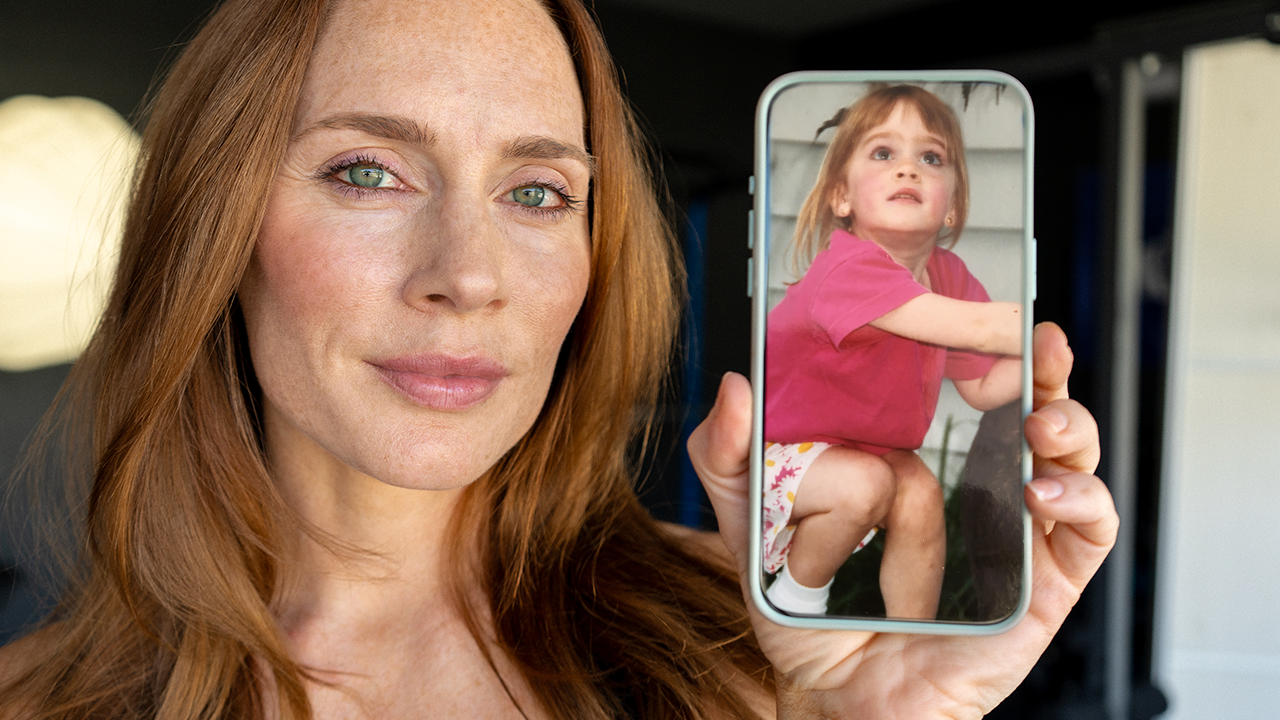
And I’m on a mission to get a barbell in every woman’s hands. After my career in powerlifting, I’ve spent the last decade educating millions of people on how to get stronger and build confidence in a world that’s focused on shrinking them.
I now coach 25,000+ women inside my strength training app, and this blog is where I share the conversations, lessons, and questions worth digging into a little deeper.
Hi, I'm meg

I’m on the cover of a book called Strong Like Her. (Even after all these years, that’s a sentence I don’t say without stopping for a second.)
Recently, Haley Shapley – the author of the book – shared a story from a signing event. A woman walked up to the table, pointed at the cover (aka me), and said something along the lines of, “Don’t you think this one took it a little too far?”
What made me laugh is that I’ve heard versions of that question my entire career…
Too much muscle.
Too intense.
Too far.
What people don’t always see is why I’m in the gym in the first place.
While this wasn’t always my relationship with training – today, I train because I love my body and I want it to be strong.
Wanting Change Doesn’t Always Mean Self-Hatred
I think a lot of people misunderstand how fitness journeys actually begin. There’s this assumption that if you want to change your body, it must mean you hate what you see in the mirror.
And yes, most of us do want to change our bodies in some way.
But that change isn’t always coming from a place of self-hatred. A lot of the time, it comes from curiosity. From seeing what’s possible and wanting to see if you can get there.
That difference matters.
Because when fitness is driven only by shame, it becomes something you avoid or force yourself through. When it’s driven by possibility, it becomes something you can return to over and over again.
Before Lifting Was About Power
Earlier in my life, I either avoided the gym or didn’t go at all. When I did go, it felt like a chore – something to check off my list in the pursuit of getting skinny.
I was never going to the gym with the intention of being a badass.
And now? That’s how I feel every day (okay, most days) I show up to train.
That shift didn’t happen because I suddenly loved my body every moment of every day. It happened because lifting gave me a different reason to show up.
The Book That Put It Into Words
After thinking about that signing story, I finally picked up a book I’d been meaning to read since it came out: A Physical Education by Casey Johnston.
This book is incredible.
It describes exactly how I felt when I first found lifting, and Casey is such a good writer that she puts language to things I’d never fully articulated before. It connected ideas for me that had been floating around unformed for years.
If you lift weights and you’ve had a transformative experience… read this book.
If you somehow ended up here and you haven’t started strength training yet… read it.
Seriously. Read it!!
A core theme throughout A Physical Education is body image and confidence; specifically, how mentally consuming it can be when you’re wrapped up in how you look and how you’re perceived. I understood that immediately. When I was in that headspace, it was hard to even imagine that not everyone was living with that same constant noise.
Casey points out how often people assume that lifting, rock climbing, or other non-traditional forms of fitness must still be about being hot… as if appearance always has to be the motivation.
She reframes these activities as choosing playing over winning – how we can (and should) show up to move, learn, and challenge yourself, rather than just trying to “win” by looking a certain way or achieving a specific aesthetic outcome.
That was the big shift in my training journey, and the way that she explains it so strongly resonated with me.
Appearance and Self-Worth Are Not the Same Thing
For a long time, I treated how my body looked and how I felt about myself as the same thing.
But they’re not.
How I felt about myself had nothing to do with my weight, my shape, or how much fat or muscle I had. It had everything to do with whether I allowed my body to be the home it always was meant to be.
And strength training helped me separate those two things for the first time.
Why “It’s Just the Gym” Is Never “Just the Gym”
I know some people hear all of this and say, “It’s just the gym. It’s not that big of a deal.”
But for many of us, it is a big deal…
It’s leaving a horrible relationship.
It’s finding time for the people who need you.
It’s having the mental clarity and headspace to stop obsessing over food – what you ate, what you’re going to eat later, what you’re avoiding – so you can actually live your life.
It’s finding something that helps you get to the other side of that negative mindset.
And reading Casey’s book brought me back to a place I’ve honestly forgotten: the pits of hell where you’re completely consumed by how your body looks and how it’s perceived.
Living in a Body Online
Over the past decade of posting online, my body has changed. And with that has come a lot of opinions.
Most of the comments I receive about my body are really comments about how it’s changed…
Half the people approve (as if I needed their permission).
Half prefer “the before.”
I remember when my body was really shifting, people applauded me, thanked me, and called me brave for sharing photos… when I was really just existing. Just having a body.
When your appearance is constantly applauded or critiqued, talking about self-esteem becomes complicated.
Self-Confidence vs. Self-Worth
Authentic self-confidence is something I’ve built over time – through lifting, through showing up consistently (for my partner, children, athletes, employees, etc.), through learning skills and getting better at them. It came from doing hard things, helping other people do hard things, and proving to myself, again and again, that I was capable of more than I thought.
That kind of confidence gave me the freedom to stop caring what people think about my body.
But confidence and worth aren’t the same thing.
Where I’ve struggled since is with self-worth.
Even as my confidence grew, there were still so many moments where I hesitated to share an opinion, talk about strength, or take up space. Not because I didn’t know what I was talking about, but because I didn’t feel qualified enough. I’m not a PhD. I’m not the strongest person in the room. I haven’t done this “long enough.” I’ve just had this feeling of not being “enough” in some invisible, constant way.
Then I had an important realization recently: self-confidence had been earned through action – and I was still treating worthiness as something I had to earn, too.
And that was the missing piece.
Worthiness isn’t granted once you hit a certain credential, total, or milestone. It doesn’t arrive when you become the best, the smartest, or the most impressive version of yourself.
Regardless of how good we are – regardless of how much we know or how much we’ve achieved – we are still inherently worthy.
…but having realizations like that don’t happen overnight, but there are ways to frame our thinking that helps to nudge us along a little faster.
Learning to Shift, Not Force
A close friend of mine, Molly Galbraith, puts this idea into practice beautifully in her book Strong Women Lift Each Other Up.
She talks about practicing thought shifts—not forcing positivity, but moving gently from negative to slightly less negative.
“I hate my body.”
Can become: “Looking in the mirror is hard because I’m uncomfortable in my body.”
It doesn’t have to become, “I love my body so much.”
You don’t have to love your body every step of the way. You don’t have to think you’re the strongest, smartest, most confident person in the room.
Respect is enough. Neutrality is enough.
And over time, these small shifts – along with lifting, therapy, and lived experience – can move you out of body hatred and toward neutrality. Not all at once. Not perfectly. But enough to quiet the noise and make room for something else.
Why I’m Creating Again
Reading A Physical Education reminded me how loud body obsession is when you’re inside it – and how easy it is to forget once you’ve moved past it.
That’s part of what inspired me to start writing and creating long-form content again. Even though it’s more time-consuming, it matters.
There are so many women exactly where Casey was in that book. Exactly where I was once. Lost. Consumed. Convinced their body is the problem.
It’s not.
And if you’re in that place right now, I hope you know there is another side to this. And strength can be part of how you find it.
Want More Like This?
If this post resonated, you’ll probably enjoy my email newsletter.
It’s where I share longer thoughts on strength, body image, confidence, and the real-life lessons that come from training—not just the highlight reel.
You can subscribe here:
👉 https://bit.ly/megblogreader
I write when I have something worth saying.
Be the first to comment