I Took Creatine for 30 Days. Here’s What Actually Happened.
And I’m on a mission to get a barbell in every woman’s hands. After my career in powerlifting, I’ve spent the last decade educating millions of people on how to get stronger and build confidence in a world that’s focused on shrinking them.
I now coach 25,000+ women inside my strength training app, and this blog is where I share the conversations, lessons, and questions worth digging into a little deeper.
Hi, I'm meg

Creatine is the most researched supplement in the fitness industry.
It’s affordable.
It’s effective.
And despite what TikTok might tell you – it’s incredibly safe for most people.
But I hadn’t taken it consistently in more than nine months.
So I decided to start from scratch.
No loading phase.
No intentional bulk.
No big training overhaul.
Just 5 grams of creatine monohydrate every day for 30 days – and I documented everything: my physique, my strength, how I felt, and whether it actually made a noticeable difference.
Here’s what happened.
What I Took (And How I Took It)
- 5 grams per day
- Micronized creatine monohydrate
- Taken daily (yes, even on rest days!)
- Timing didn’t matter
That’s it.
No cycling.
No loading phase.
No fancy stacking.
If you’re in a larger body, you might benefit from slightly more. In a smaller body, slightly less could work. But for most people? Five grams is simple and effective.
I mixed mine into electrolytes pretty much everyday – mostly because it tasted good and made it easier to stay consistent.
Consistency > timing.
Starting Point: Physique & Strength Baseline
Before adding creatine back in, I documented two things:
- My physique and bodyweight
- My top deadlift single
Because if this was going to be a real experiment, I needed a clear baseline.
👙 Physique Baseline
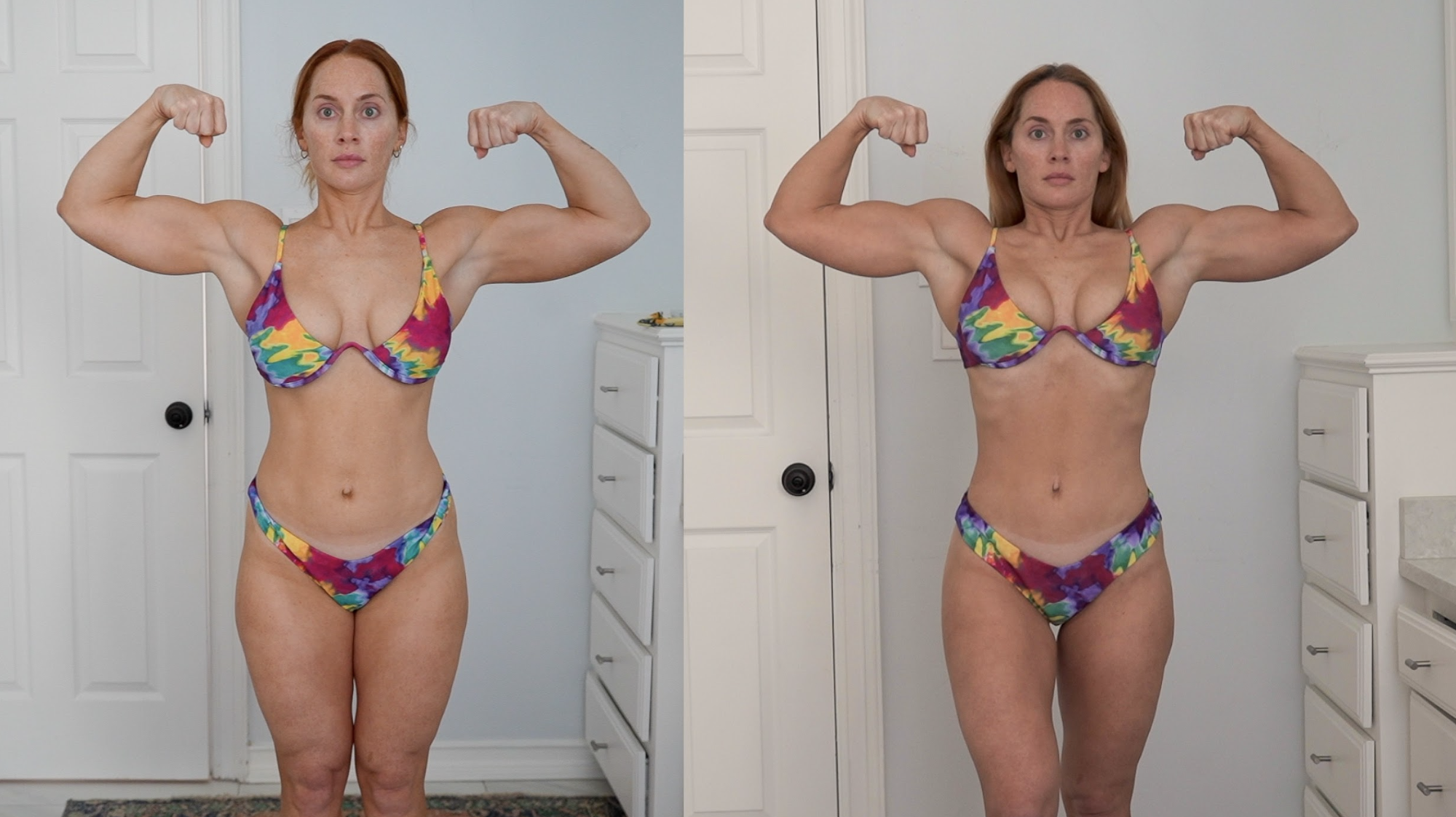
When I started, I weighed 138 pounds – funny enough it was the same weight I used to compete at in powerlifting years ago.
After multiple pregnancies and a long break from consistent supplementation, I knew I had lost some muscle mass. I wasn’t trying to bulk. I wasn’t cutting aggressively. I was simply training as usual.
No calorie manipulation.
No intentional recomposition phase.
No program overhaul.
Just normal training – with the addition of creatine.
💪 Strength Baseline: Day 1 Deadlift
On Day 1, I tested my top deadlift single.
315 pounds.
Not in a peaking block.
Not during a strength-focused phase.
Just a snapshot of where my strength actually stood.
That number became my marker.
If creatine truly improves performance through better ATP regeneration and fuller muscle saturation, I should see something shift over 30 days.
Not magically.
Not overnight.
But measurably.
Week 1: The “Is This a Side Effect?” Phase
About a week in, I had a mild headache.
Was it the creatine?
Maybe.
But also:
- It was August in Texas
- I was training outside
- I was sweating a lot
- I could’ve just been dehydrated
This is where a lot of people get tripped up.
When you introduce something new into your routine, it’s easy to blame it for anything that feels “off.” But research consistently shows creatine has very few negative side effects in healthy individuals.
The most common one?
Mild gastrointestinal discomfort.
If that happens:
- Split your dose into two smaller servings.
- Make sure you’re hydrated.
- Stick with micronized creatine.
For me? The headache never returned.
Week 3: Full Saturation (And a Noticeable Shift)
Around days 19-21, I felt it.
Not a magical overnight strength explosion.
But something subtle.
That little voice in my head that says,
“Take it easy today.”
… got quieter.
I was pushing a little harder.
Adding a little more weight.
Recovering well.
Having more fun training.
That’s what creatine does.
Once your muscle stores are fully saturated (usually around 3-4 weeks), you don’t suddenly become superhuman; you just gain a small edge.
Session after session.
And over time, that compounding effect can have a big impact.
The Big Myths About Creatine
Before I get to the final results of my experiment, I thought it would make sense to pause a do a little bit of myth busting. So let’s get to it…
“Creatine is bad for your kidneys.”
Here’s what’s actually happening:
When you take creatine, your body produces more creatinine – a waste product that’s excreted in urine.
In healthy individuals, this is not a problem.
However:
- If you have kidney disease, talk to your doctor first.
- Creatinine levels are used as a marker for kidney health, so supplementation can sometimes confuse lab work.
But decades of research do not show creatine causes kidney damage in healthy people.
“Creatine will make you gain weight.”
It might.
But let’s clarify why.
You could see:
- Increased muscle mass
- Increased water stored inside muscle cells
That’s not fat gain.
If your only goal is to see the number on the scale drop, you might not love that.
But if your goal is body recomposition – losing fat while building or preserving muscle – or looking leaner, creatine absolutely supports that.
“Is creatine safe while breastfeeding?”
I was nursing during this experiment.
Here’s what we know:
- Creatine is well studied in adults.
- Animal studies during pregnancy show promising neuroprotective effects.
- Human data is limited.
- Creatine does pass into breast milk, but we don’t know exactly how much.
The biggest risk with any supplement during pregnancy or nursing isn’t creatine itself… it’s contamination.
That’s why third-party testing matters.
Personally, I waited until my daughter was older and on solids before resuming supplementation. That was the choice I felt comfortable with.
Of course, if you’re pregnant or nursing, talk to your provider.
The 30-Day Results
I went into this expecting two things:
- A small bump in strength
- Maybe a pound or two of scale weight
What actually happened was more interesting. Let’s break it down.
1️⃣ Physique Changes
First up – the scale.
Day 1: 138 lbs
Day 30: 138 lbs
No change in bodyweight.
And yet…
- My waist looked tighter.
- My thighs looked leaner where they meet.
- My delts had noticeably more definition.
- My glutes looked fuller.
Visually, it looked like a drop in body fat – especially through my waist and upper legs – without any actual weight loss.
That’s body recomposition.
And the only variable I changed was adding 5 grams of creatine per day.
No calorie shift.
No new program.
No intentional cut.
2️⃣ Strength & Performance Changes
This is where I was genuinely shocked.
Around week three, when muscle stores should be fully saturated, something shifted.
It wasn’t dramatic overnight strength.
It was:
- More motivation
- More output
- The “slacker” voice in my head getting quieter
- A little more weight on the bar
- A little more confidence under heavy loads
And then I hit a deadlift that had no business moving.
After 10+ years of strength training – at 37 years old – hitting 90–95%+ loads without a specific peaking block is not easy.
But it moved.
And I laughed out loud.
Because it felt unreal.
Not because creatine is magic, but because that small edge, session after session, added up.
So… Is Creatine Worth It?
Creatine didn’t:
- Increase my bodyweight
- Make me feel puffy
- Require changes to my diet or program
What it did do:
- Improve training output
- Support a leaner-looking physique
- Help me lift heavier within 30 days
Five grams a day.
Thirty days.
No other variables changed.
If you lift weights and care about strength or muscle retention, creatine is one of the few supplements that consistently delivers.
It’s not flashy.
It just works.
What Brand Did I Use?
For full transparency – I own Buff Chick Supplements, and I used our micronized creatine monohydrate for this experiment.
That said, we don’t use proprietary blends. It’s straight-up creatine monohydrate – the same ingredient you’ll find in other reputable, third-party tested brands.
So you absolutely can use any high-quality creatine monohydrate.
If you’d like to support a women-owned brand and try the exact one I used, you can check out our creatine here and use code MEG for 10% off.
No hype.
No magic formula.
Just creatine.
🎥 P.S. Want to see the video version of this experiment? Check it out here.
📰 P.P.S. Don’t want to miss any blog posts or YouTube videos? Be sure to join my newsletter here.
Be the first to comment