Lifting While Pregnant: A Safe Strength Training Guide for Every Trimester
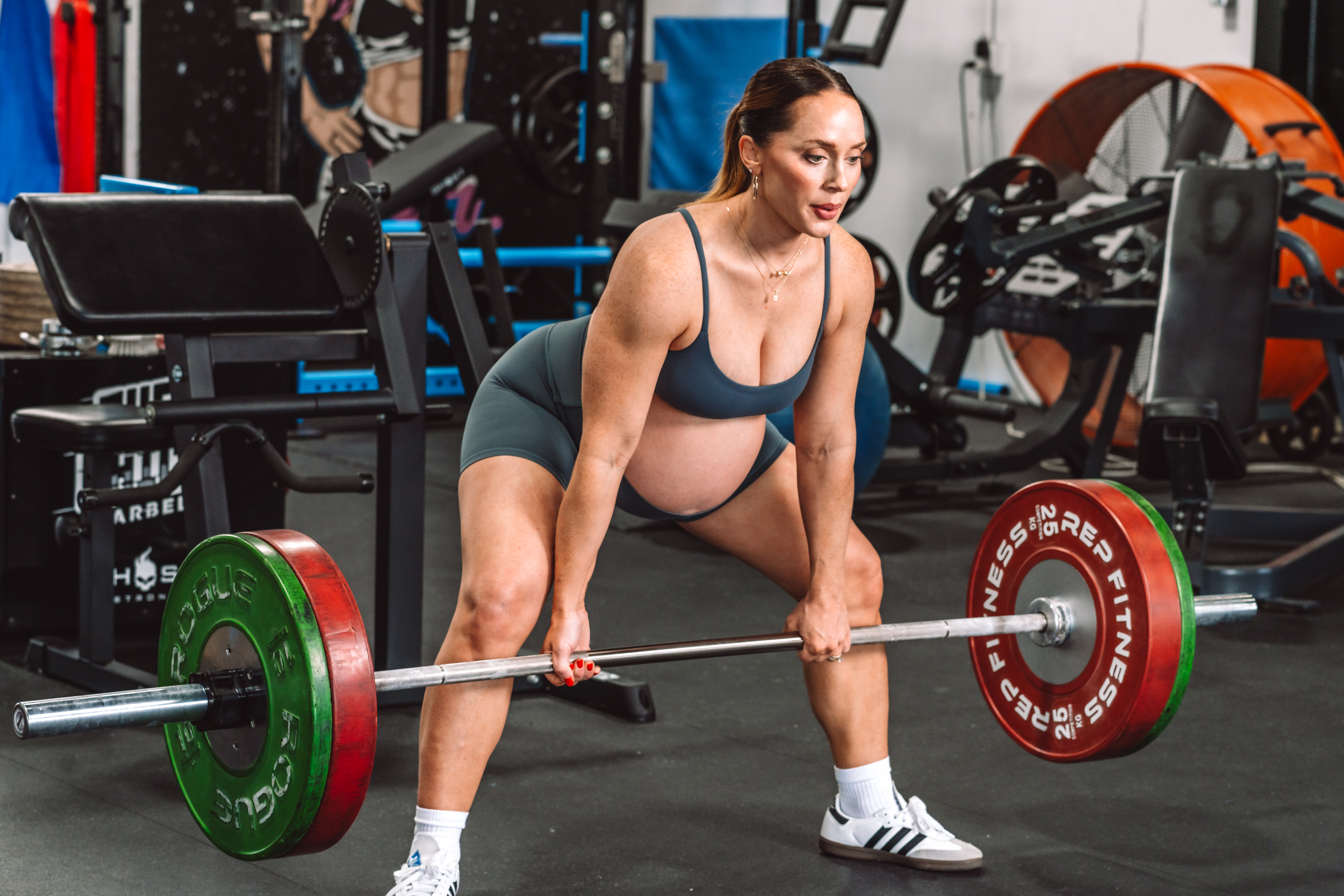
And I’m on a mission to get a barbell in every woman’s hands. After my career in powerlifting, I’ve spent the last decade educating millions of people on how to get stronger and build confidence in a world that’s focused on shrinking them.
I now coach 25,000+ women inside my strength training app, and this blog is where I share the conversations, lessons, and questions worth digging into a little deeper.
Hi, I'm meg

After two pregnancies and coaching thousands of moms, here’s what actually matters.
I’ve lifted through two pregnancies.
I’ve recovered from two births.
And since then, I’ve coached thousands of pregnant and postpartum women.
If I could sit across from you – whether you’re newly pregnant, thinking about trying, or deep in your third trimester – here’s what I’d want you to know:
You are not fragile.
But you do need to train intelligently.
Let’s talk about what that actually means.
First: Yes, You Can Lift While Pregnant
The old advice used to be: “Don’t do anything during pregnancy that you weren’t doing before.
That’s… incomplete.
Yes, high-risk contact sports or activities with a serious fall risk are contraindicated. But strength training? Cardio? Resistance work?
…Not only is it allowed, it’s recommended.
Current guidelines suggest pregnant women should aim for at least 150 minutes of moderate activity per week.
And after coaching thousands of women through pregnancy, I can confidently say:
The moms who stay active tend to feel stronger, more capable, and more prepared for birth and recovery.
Why Exercise During Pregnancy Matters (And It’s Not About “Bouncing Back”)
Let’s clear something up: Pregnant women shouldn’t (and many don’t) train with the only motivation of “getting their body back” after birth.
That mindset is outdated and honestly offensive to those of us who trained through pregnancy for more.
The real benefits of strength training and consistent movement during pregnancy include:
- Reduced risk of gestational diabetes
- Lower risk of high blood pressure and preeclampsia
- Decreased severity of low back pain
- Improved mood and reduced depression symptoms
- Better sleep
- Improved cardiorespiratory fitness (your heart is working for two)
- Potentially easier postpartum recovery
And after living through postpartum twice? Recovery is where the long game matters.
The way you train during pregnancy can either support that recovery… or make it harder.
The Biggest Mindset Shift: Train Like an Athlete Preparing for an Endurance Event
When I was pregnant, I stopped thinking about PRs.
I started thinking about birth.
Birth is an endurance event.
Recovery is a rebuild phase.
So instead of asking: “Can I still lift this?”
I started asking: “Will this help me recover faster?”
That shift changes everything.
Now, after coaching thousands of moms (in my app Plus+1), I teach the same framework:
You’re not losing your strength identity. You’re adapting it for a season.
What Actually Changes During Pregnancy (That Affects Training)
Nearly every pregnant athlete experiences some version of:
- Nausea and fatigue
- Pelvic discomfort
- Increased urination (goodbye, uninterrupted sleep)
- Shifting center of gravity
- Changes in balance and stability
- Diastasis recti (some degree of abdominal separation is normal)
- Emotional shifts and identity changes
Your program should account for those.
If it doesn’t… it’s not built for pregnancy.
How I Recommend Lifting During Pregnancy
Here’s what I personally did; and what I coach pregnant women on.
1. Shift From Max Strength to Moderate Intensity
PR chasing? Not necessary.
Instead:
- Higher rep ranges
- Moderate loads
- Controlled tempo
- Clean, intentional reps
You can absolutely still challenge yourself.
You just don’t need maximal strain.
2. Protect Your Pelvic Floor
Even if you feel strong, your pelvic floor is under increasing load as pregnancy progresses.
That means:
- Avoiding unnecessary max-effort lifts
- Managing intra-abdominal pressure
- Ditching the Valsalva maneuver
- Coordinating breath with movement
Instead of holding your breath:
- Inhale on the eccentric
- Exhale on the concentric
- Learn to contract and relax your pelvic floor intentionally
This alone can make a massive difference postpartum.
3. Watch for Coning or Excessive Abdominal Pressure
As your belly grows, your rectus abdominis separates; that’s normal.
What you want to avoid is:
- Coning
- Bulging along the midline
- Uncontrolled pressure pushing into the linea alba
This doesn’t mean you stop training your core. It means you train it differently.
4. Modify Positions When Needed
Some women feel fine lying flat on their backs for short periods. Others don’t.
As pregnancy progresses, the baby’s weight can compress the vena cava in certain positions.
If you feel:
- Lightheaded
- Tingly
- Dizzy
Switch to incline variations.
Listen to your body.
5. Train for Real Life
One of my favorite shifts during pregnancy was thinking: “I’m training to carry a baby.”
So it’s important to emphasize:
- Unilateral carries
- Upper back strength
- Posterior chain strength
- Pressing and pulling patterns
Because motherhood is asymmetrical and repetitive.
Strong upper backs matter when your chest grows.
Strong glutes matter when your posture shifts.
Strong shoulders matter when you’re holding a toddler for 45 minutes straight (Trust me… I know this one all two well!).
What I’d Skip
After two pregnancies and years of coaching:
I would personally pass on:
- Contact sports
- High fall-risk activities
- True max-effort lifting
- Training purely for aesthetics
- Programs that ignore pregnancy-specific needs
You are not fragile.
But you are physiologically adapting in major ways.
Train accordingly.
Cardio? Yes.
Cardiovascular fitness matters during pregnancy.
Walking, cycling, incline treadmill work, short runs (if already conditioned), swimming — all excellent options.
The key:
Moderate intensity.
Sustainable effort.
Recovery-aware.
The Emotional Side No One Talks About
Pregnancy can mess with your identity… especially if strength is part of who you are.
I’ve seen this in myself, and in many other women.
You might feel:
- Frustrated at reduced capacity
- Nervous about losing progress
- Anxious about postpartum
That’s normal.
What I can tell you from the other side: Strength comes back.
And, protecting your body during pregnancy helps it come back faster.
Final Thoughts From the Other Side of Training Through Two Pregnancies
If you’re pregnant and lifting:
You’re not selfish.
You’re not reckless.
You’re not harming your baby.
You’re preparing your body for birth and recovery.
You’re not just training for today. You’re training for motherhood.
Want More Guidance?
- Watch: My full prenatal and postpartum playlist on YouTube for real-time training adjustments and recovery guidance. –> WATCH HERE
- Train: Checkout my prenatal and postpartum strength training app – Plus+1 – for strength programming built specifically for pregnancy and postpartum. –> TRY IT FREE FOR 7 DAYS HERE
- Learn: Get evidence-based lifting guidance (without the noise) delivered through my newsletter. –> JOIN HERE
Be the first to comment